
Bairro Alto:
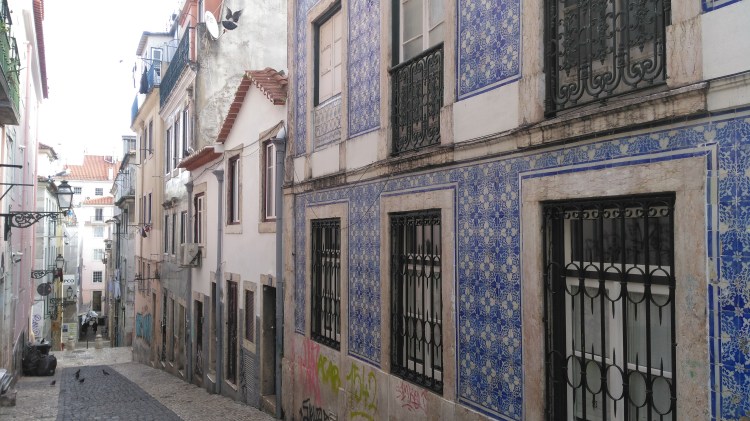
Bairro Alto (in English, the upper district) is one of the historic districts of Lisbon. Five centuries old, it dominates one of the seven hills of Lisbon. Built following an orthogonal plan, it is composed mainly of beautiful traditional houses of the 18th and 19th centuries with facades in tiles. The newcomer will get lost for his pleasure. From the 70s-80s, it becomes one of the emblematic neighborhoods of the Lisbon night. Very quiet during the day, it comes alive at night with many restaurants and bars. Lisboners and tourists like to meet and chat over a drink in a good-natured atmosphere.
Principe Real:
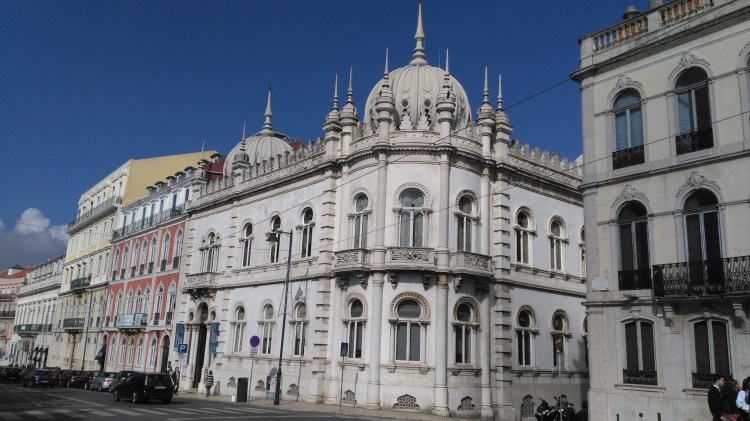
In the center of this district, the pretty garden of Principe Real with its exotic trees where residents come to relax or have coffee in one of its small kiosks. Opposite, a strange building with Moorish architecture, the Embaixada, hosts small shops, two restaurants and a very good Gin bar. In this bohemian and posh district of Lisbon, the great Portuguese chefs have opened many restaurants and Portuguese designers and craftsmen present their creations in multiple concept stores. Going along the street Dom Pedro V which becomes Rua Escola Politecnica, the walker will be able to discover the museum of natural history and the botanical garden.
Chiado:
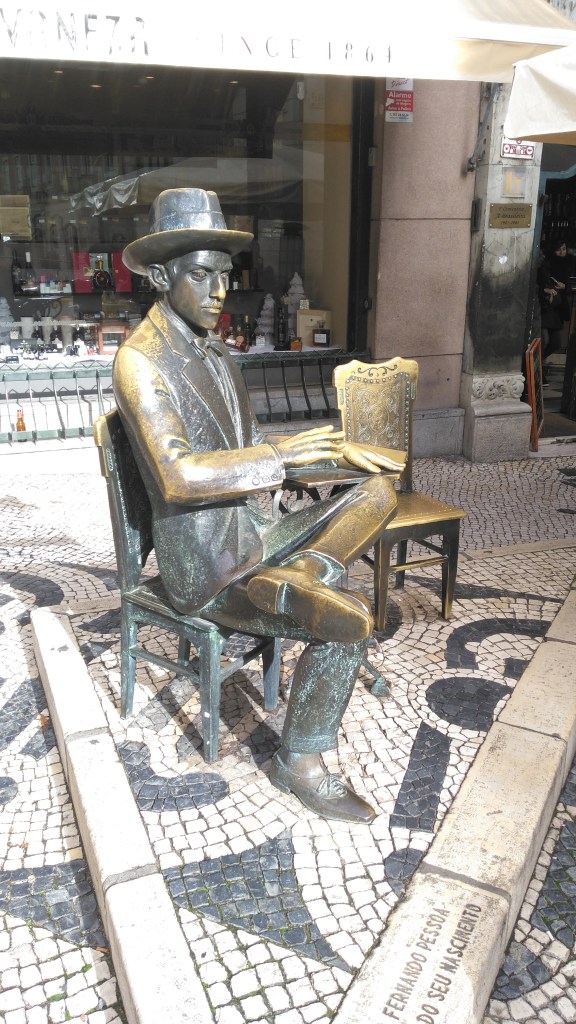
Located between Bairro Alto and Baixa, Chiado is an elegant neighborhood where locals like to wander around the weekend in the many trendy shops or old bookshops. The statue of the great poet of the sixteenth century, Luis de Camoes, dominates the beautiful square that bears his name. Two steps away, it is the famous writer Fernando Pessoa who is portrayed in front of his favorite café, the Brasileira, for the great joy of the tourists who photograph themselves at his side. The history of Lisbon is also told in the streets of Chiado: the ruins of the Carmo Church destroyed by the earthquake of 1755, the Carmo square which saw the start of the 1974 Carnation Revolution and Garrett Street where the department stores were ravaged by the terrible fire of 1988.
Castelo, Sé and Alfama:

The walls of Castle St George (Castelo São Jorge) dominate the city of Lisbon. This is the historic heart of Lisbon. The view is spectacular. King Alfonso I conquered it from the Moors in 1147. Shortly afterwards, until the beginning of the 13th century, the imposing Cathedral (Sé in Portuguese) was built on the lower side of the castle. Arriving at the top of the hill, it is recommended to go and enjoy the view of the different points of view: Miradouro da Graça, Miradouro da Santa Luzia and Miradouro da Senhora do Monte. Do not miss either to stroll along the paths of the flea market in Feira da Ladra and visit the National Pantheon. To reach the river, there is nothing like descending through the narrow streets of the popular neighborhood of Alfama, which is rocked at night by the nostalgic melodies of the Fado singers.
Baixa:

Baixa is as its name indicates in Portuguese the lower part of the city. Ravaged by the Earthquake and the Tsunami of 1755, it was totally rebuilt following an orthogonal plan under the impulse of the great prime minister of the time, Sebastião José de Carvalho e Melo, Marquis of Pombal. Opposite the Tagus is the Commerce Square (Praça do Comercio in Portuguese or also called Terreiro do Paço). Around this great square, which saw the Portuguese explorers leaving, was the Royal Palace before the earthquake.
Cais do Sodre:

Cais do Sodre has been competing for a few years with Bairro Alto as a party district with the many bars on Pink Street including Pensão Amor, an old brothel converted into a bar. From Cais do Sodre it is possible to take the boat to Cacilhas or the train to Belem or Caiscais. In front of the station, a market, Mercado da Ribeira, has been transformed into a huge dining room where it is possible to taste the dishes of the great Portuguese chefs.
Lapa-Estrela:
Lapa is the noble district of Lisbon. Very calm, it welcomes in beautiful mansions embassies or residences of ambassador. It is in this beautiful neighborhood that resides the queens of Pop and Fado. Above the Tagus overlooks the beautiful Museum of Ancient Arts which houses a rich collection of paintings and religious and decorative arts. With its baroque style and majestic dome, the Basilica of Estrela stands on the heights of the district. It faces the Estrela Garden, one of the most beautiful in Lisbon. Between the two, there is the departure of the Tram 28 which begins its descent while passing near the residence of the 1st Minister and the National Assembly and which leads the tourists to the castle Saint Georges.
Bélem
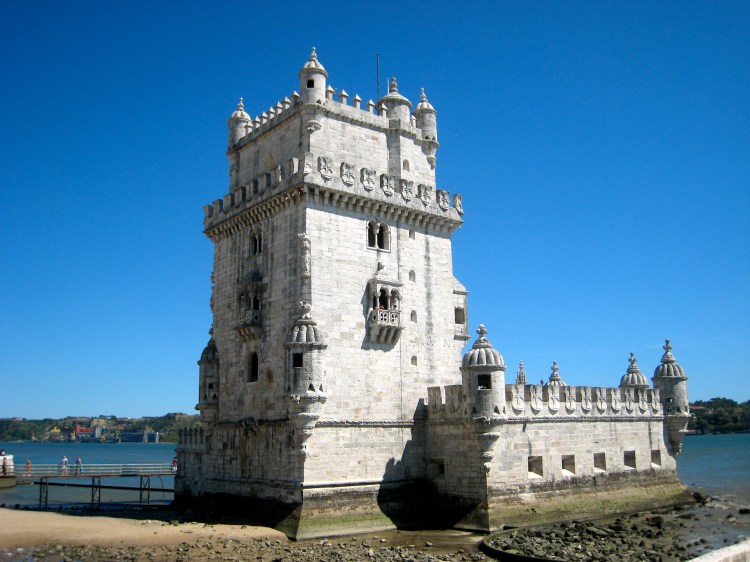
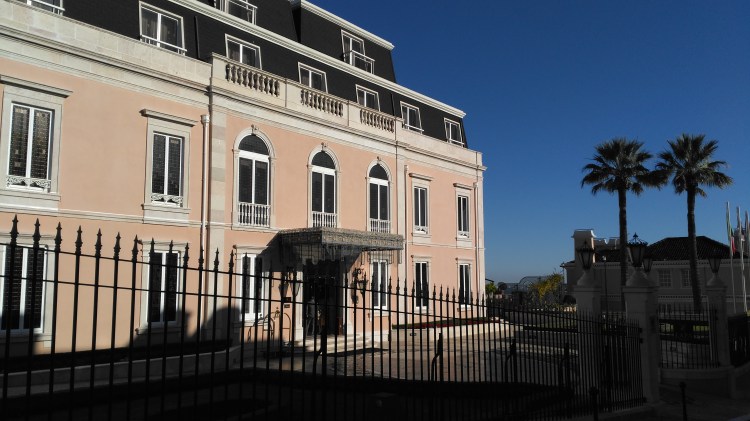
Belem is the most western district of Lisbon. Built in the sixteenth century during the reign of King Dom Manuel I and in the so-called manuellin style, the tower of Belem and the monastery of Jeronimos are the symbols of Lisbon. The tower originally protected the entrance to the Tagus. The interior of the tower is not spectacular. On the contrary, do not miss the visit of the monastery with its beautiful cloister. Nearby, gourmands will surely stop to taste the pastéis of Belem, the best Lisbon. In front of the monastery, the monument of the discoveries pays tribute to the Portuguese adventurers and a large map drawn on the ground recalls the many territories discovered by the Portuguese throughout the world. Near the monastery, modern art lovers will visit the Berardo museum or the MATT museum near the river. A little further, despite the ugliness of the building that houses it, the collection of the coaches museum is admirable and unique in the world. Opposite, next to the old coaches museum, stands, with its pink facades, the Belem Palace, residence of the President of the Portuguese Republic.
Park of Nations:
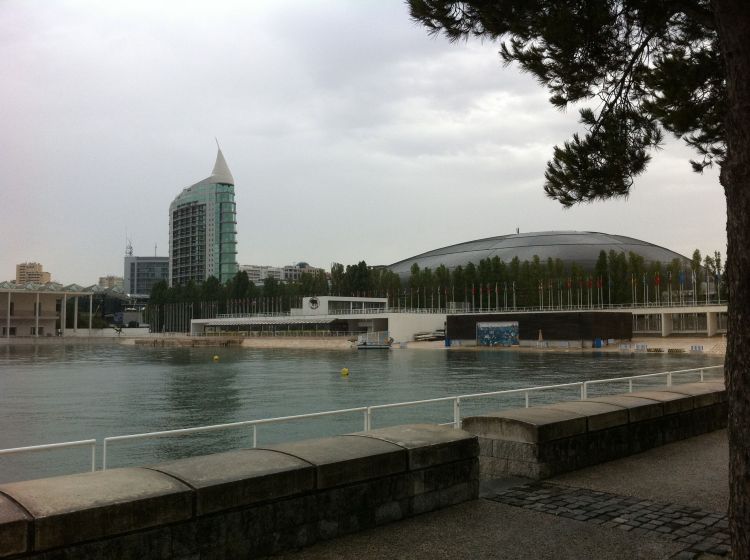
At the far east of Lisbon stretches for 5 km from the banks of the Tagus, the Park of Nations, also called Expo. This part of the city was developed and modernized for the 1998 World Expo. Altice Arena is where the international artists perform or the main Websummit conferences take place. Nearby, the Aquarium will delight children with its moon fish and small otters players. In the distance, the Vasco de Gama bridge crosses the Tagus for 12 km.
Marques de Pombal-Parc Edouard VII:
Going up Avenida da Liberdade, with its luxury shops, the walker will discover a large roundabout where sits at its center the majestic statue of the Marquis de Pombal who rebuilt Lisbon after the earthquake. A little further up extends the Edward VII Park. Within it, plant lovers will have the pleasure of discovering the Estufa Fria, a large greenhouse of exotic plants covering 1.5 hectares.
Alcantara:
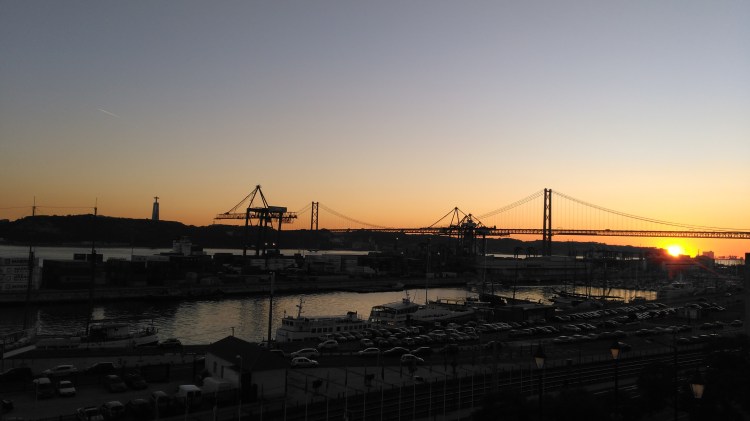
Under the immense bridge of April 25, similar to the one of San Francisco, the Docks host in front of one of the marinas many restaurants, bars and discotheques. During the day, it is possible to admire at the Museum of the Orient the riches harvested in the Portuguese possessions.
In this area, old warehouses have been transformed into an alternative location, the LX Factory, with restaurants, concept stores and co-working offices for start-ups.
Ajuda:
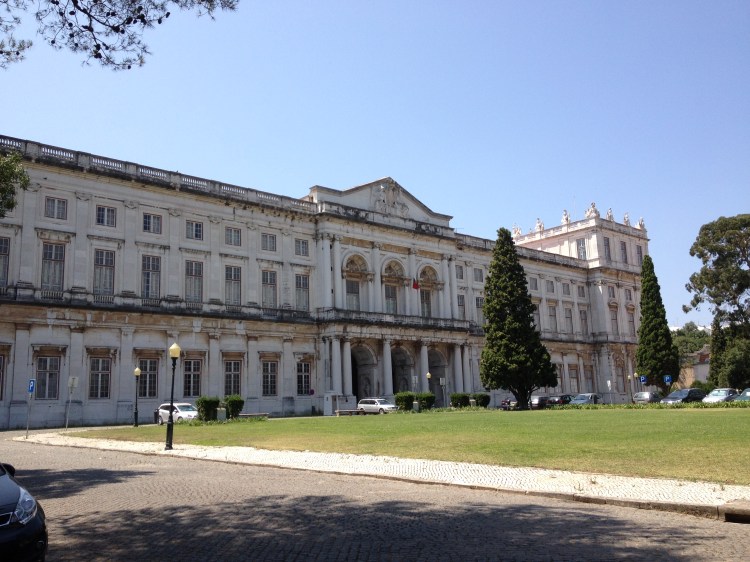
On the top of the hill above Belem lies the Ajuda Palace. Following the earthquake of 1755 that destroyed the former Royal Palace on the present Terreiro do Paço, King Joseph built a wooden palace in Ajuda that burned in 1794. In 1795 the construction of the current palace began. . With the exile of the royal family in Brazil, the palace became the official residence of Portuguese rulers only from 1861. It has been open to the public since 1968 and allows visitors to discover the splendor of the Portuguese court in the nineteenth century . Its impressive dining room is still used for some official diners. A project is currently underway to restore its west facade which had remained unfinished since the nineteenth century.
 Voilà Lisboa!